
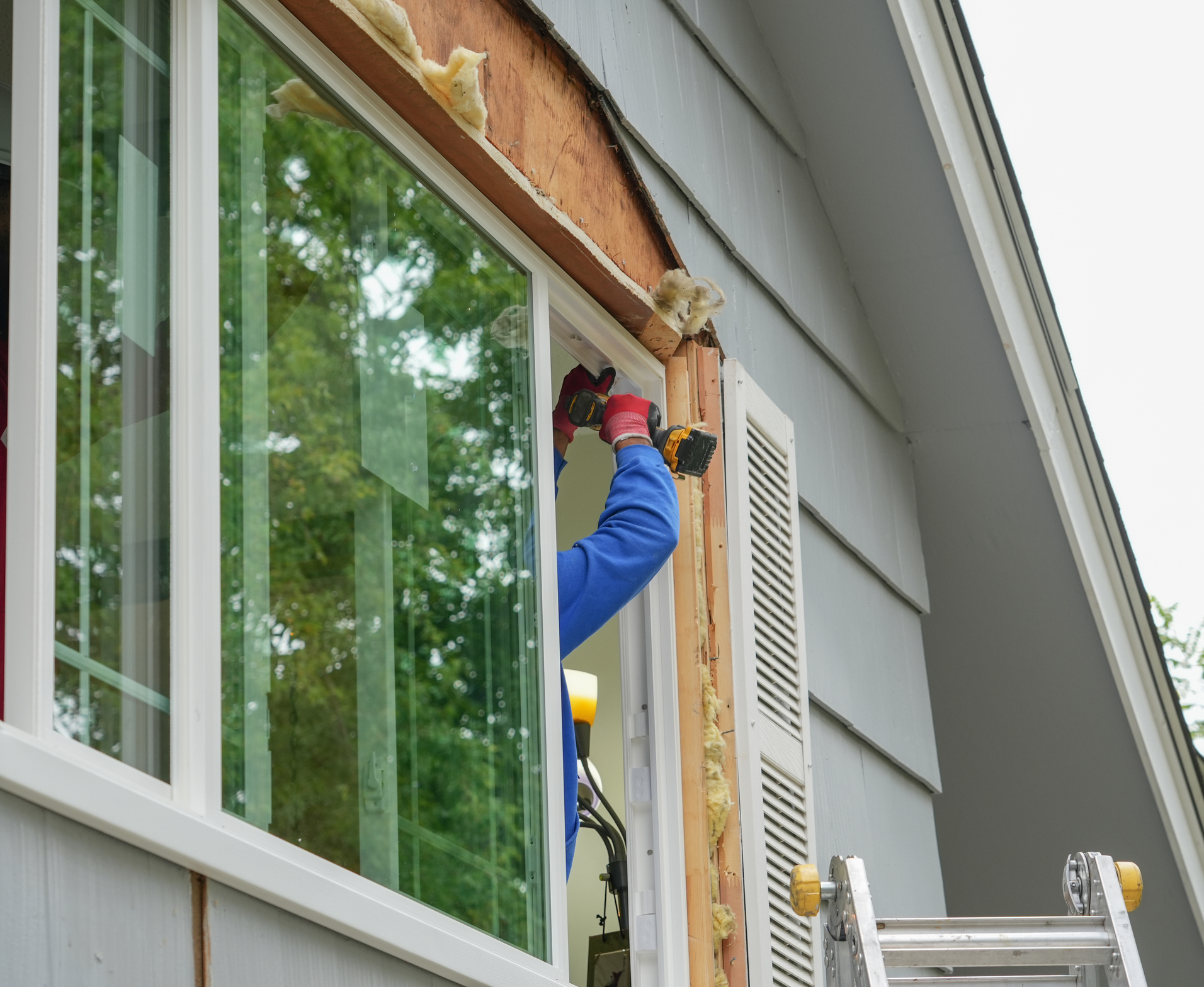
Ironically, windows are easy to overlook. They’re admittedly not the kind of thing you inspect on a Saturday morning the way you might check a roof or a gutter. Until one day a room feels drafty, a heating bill creeps higher than it should, or a pane fogs up and won’t clear.
The tricky part is that windows rarely fail all at once. They wear down slowly, gradually, and the early signs are subtle enough to explain away. So if you’ve found yourself wondering whether your windows are a problem — or whether you’re overthinking a little condensation — you’re asking exactly the right question at exactly the right time.
Here’s how to tell the difference between normal wear and a window that’s genuinely ready to be replaced, plus what tends to happen when those signs go unaddressed.
The Subtle Signs It’s Time to Replace the Windows Most Homeowners Miss
A window doesn’t have to be broken to be failing. Some of the earliest indicators are the ones easiest to shrug off:
- A room that never quite gets comfortable, no matter what the thermostat is set to
- A faint draft you can feel when you stand near the glass, even with the window shut
- Condensation or fog trapped between panes (a sign the seal has failed)
- Windows that stick, stiffen, or refuse to stay open
- Rising energy bills without an obvious cause
- Outside noise that seems louder than it used to be
Individually, any one of these is easy to dismiss. Together, they tend to point in the same direction: windows that are no longer sealing, insulating, or operating the way they should.
Drafts and Temperature Swings
Take note. If certain rooms are always colder in winter or hotter in summer, the windows are a likely culprit. As seals and frames age, they lose the ability to keep conditioned air in and outside air out. You may not notice the leak itself — just the symptoms: a room you avoid in January, a thermostat that runs constantly, a HVAC system working harder than it needs to.
Condensation Between the Panes
A little condensation on the inside surface of a window on a cold morning is usually normal. Moisture trapped between the panes of a double- or triple-glazed window is not. It means the seal has failed and the insulating gas has escaped, leaving the window far less efficient than it was designed to be. Once that seal is gone, cleaning won’t fix it — the fog is on the inside.
Difficulty Opening, Closing, or Locking
Windows should open and close smoothly and lock securely. When they start to stick, sag, or maybe even require a shoulder to move, it often signals that the frame has warped or the hardware has worn out. Beyond the daily annoyance, a window that won’t lock properly is a security and safety concern — and one worth taking seriously.
Visible Wear: Rot, Water Stains, and Damage
Wood frames can rot. Vinyl and other materials can crack, warp, or discolor with years of sun and weather exposure. Water stains on the wall or sill beneath a window are a particularly important warning sign, because they suggest moisture is finding its way in — and moisture problems rarely stay contained to the window itself.
Rising Energy Bills
Windows are one of the most common places a home loses energy. If your heating and cooling costs have been climbing and you’ve ruled out other causes, aging windows may be quietly draining efficiency. Modern replacement windows are built to manage temperature and reduce energy loss far more effectively than older units, which is often where homeowners see the difference most clearly.
What Happens If You Wait
Here’s some semi-good news. Waiting doesn’t always cause a catastrophe. A drafty window won’t collapse overnight. But the costs of putting things off tend to accumulate quietly, and they’re worth understanding before you decide to put it off:
- Energy waste adds up. Every month a failing window leaks conditioned air is money spent heating or cooling the outdoors.
- Small problems grow. A failed seal or minor frame issue is a straightforward fix. Water intrusion that reaches surrounding walls, trim, or framing is not.
- Comfort keeps slipping. The room you avoid today becomes the room nobody uses.
- Moisture invites bigger trouble. Persistent water around a window can lead to rot, mold, and damage to the structure behind it.
None of this means you need to panic at the first sign of a draft. It means the window is worth watching — and that acting while a problem is still small is almost always cheaper and simpler than acting after it’s grown.
So, Do You Actually Need New Windows?
If you recognized just one of the signs that it’s time to replace your windows above, you’re probably fine to keep an eye on things. If several sprung to mind, it may be worth having someone take a look before the next heating or cooling season. A professional assessment can tell you whether a repair will do or whether replacement is the smarter long-term move — and there’s no downside to knowing where you stand.
At Cregger Construction, window replacement is part of our full range of exterior home services, and we help homeowners weigh comfort, efficiency, and appearance to find the option that actually fits their home rather than a one-size-fits-all fix.
Why Homeowners Trust Cregger Construction
For more than 30 years, our crew has helped homeowners across Maryland and the Mid-Atlantic upgrade and protect their homes with careful craftsmanship and clear, straightforward guidance. When it comes to windows, that means honest advice about what your home needs — and what it doesn’t.
Based in New Windsor, Maryland, we serve Howard, Carroll, and Frederick counties, Annapolis, Ellicott City, Hunt Valley, and surrounding areas throughout Maryland, DC, Virginia, Delaware, and Pennsylvania. If you’re wondering whether it’s time, you can always request a quote and get a clear read on where your windows stand.
***
TL;DR: Signs It’s Time to Replace Your Windows
Windows tend to fail gradually, so the early warning signs are easy to miss: persistent drafts, rooms that won’t hold temperature, condensation trapped between panes, windows that stick or won’t lock, visible rot or water stains, and rising energy bills. One sign on its own usually isn’t cause for alarm, but several together suggest your windows may be ready for replacement. Waiting rarely causes an immediate crisis, but it does let energy waste, comfort issues, and moisture damage accumulate over time. A professional assessment is the simplest way to know whether repair or replacement makes sense. Cregger Construction, based in New Windsor, MD, offers window replacement as part of its full exterior home services across Maryland and the Mid-Atlantic.
***
FAQ
How do I know if my windows need to be replaced or just repaired?
It depends on the problem. Worn hardware or a stuck sash can sometimes be repaired, while a failed seal, warped frame, or persistent moisture usually points toward replacement. A professional assessment is the most reliable way to tell the difference.
Is condensation between the panes a serious problem?
It’s a clear sign the window’s seal has failed and it’s no longer insulating as designed. It won’t cause immediate harm, but the window has lost much of its efficiency and typically needs to be replaced rather than repaired.
Can old windows really affect my energy bills that much?
Absolutely. Windows are one of the most common places a home loses heated or cooled air. Aging, poorly sealed windows can quietly raise energy costs, and replacing them is often where homeowners notice a difference.
What happens if I wait to replace failing windows?
Usually nothing dramatic in the short term. Over time, though, energy waste adds up, comfort declines, and moisture problems around a window can spread to the surrounding wall and framing, turning a small fix into a larger one.
Does Cregger Construction handle window replacement?
Yes. Window replacement is part of Cregger Construction’s full range of exterior home services, alongside siding, doors, gutters, and roofing, serving homeowners throughout Maryland and the Mid-Atlantic.